
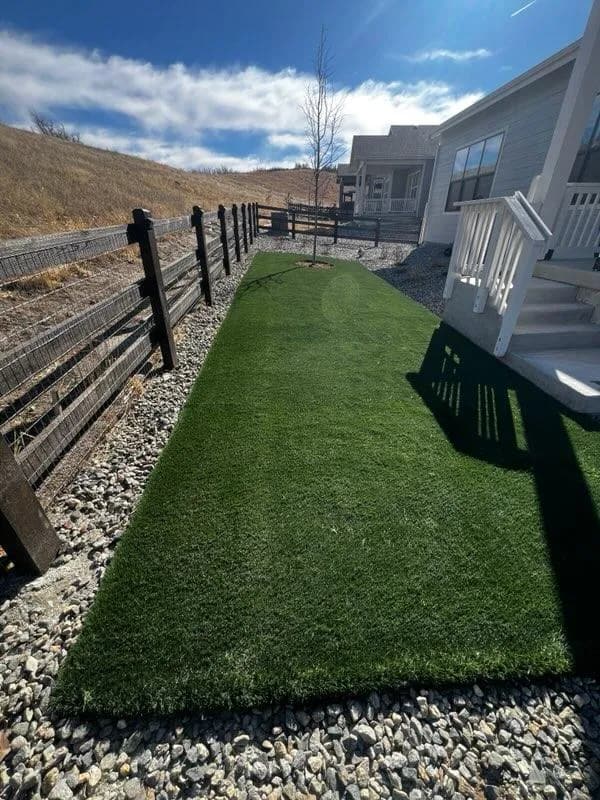
Custom putting greens for late-season practice deliver fast, consistent fall roll speeds through resilient, uniform synthetic surfaces engineered for firmness and smoothness. Artificial Grasscapes designs greens with precise cup placement, contours, and target speeds suited to short-game training. Castle Rock, CO-based, the company serves late-season practice needs across Colorado properties with custom golf turf installations.
Key Takeaways
- Custom putting greens require understanding your specific practice goals before selecting turf products.
- Resiliency, uniformity, smoothness, and firmness directly determine your green’s overall speed performance.
- Tour Greens simulate bent grass performance with customized speeds, breaks, and undulations for practice.
- Artificial Grasscapes designs putting surfaces in Castle Rock, Colorado for fall season training.
Why Does Fall Change Your Putting Practice?
Cooler temperatures and shrinking daylight reshape how golfers use their practice time once autumn arrives. Shorter outdoor windows push many players toward structured, purposeful sessions rather than casual putting. A backyard putting green fall colorado owners rely on through late October and November needs to deliver real practice value, not just a green patch to glance at.
Good green design starts before anyone chooses a turf product. Planning begins with a clear answer to one question: what does the golfer actually want to practice? Short pressure putts, long lag putts, uphill rolls, and tricky side-hill breaks all demand different contours and cup placements. A custom golf green castle rock homeowner commissions should reflect those specific practice goals, not a generic layout. The result should function as a genuine training tool, not simply a patch of short artificial turf with holes punched into it.
What Putting Speed Works Best for Fall Sessions?
Backyard greens play best at a Stimp speed between 8 and 10. That range stays well below the 10-to-13 speeds found on championship courses. It suits the shorter, colder sessions typical of late-season practice.
Fall practice priorities often include:
- Locking in distance control before winter layoff
- Reading breaking putts at a forgiving, moderate speed
- Sharpening chips and short-game shots before course closures
These priorities shape the green’s design far more than turf choice alone.
What Makes a Green Roll True in Fall?
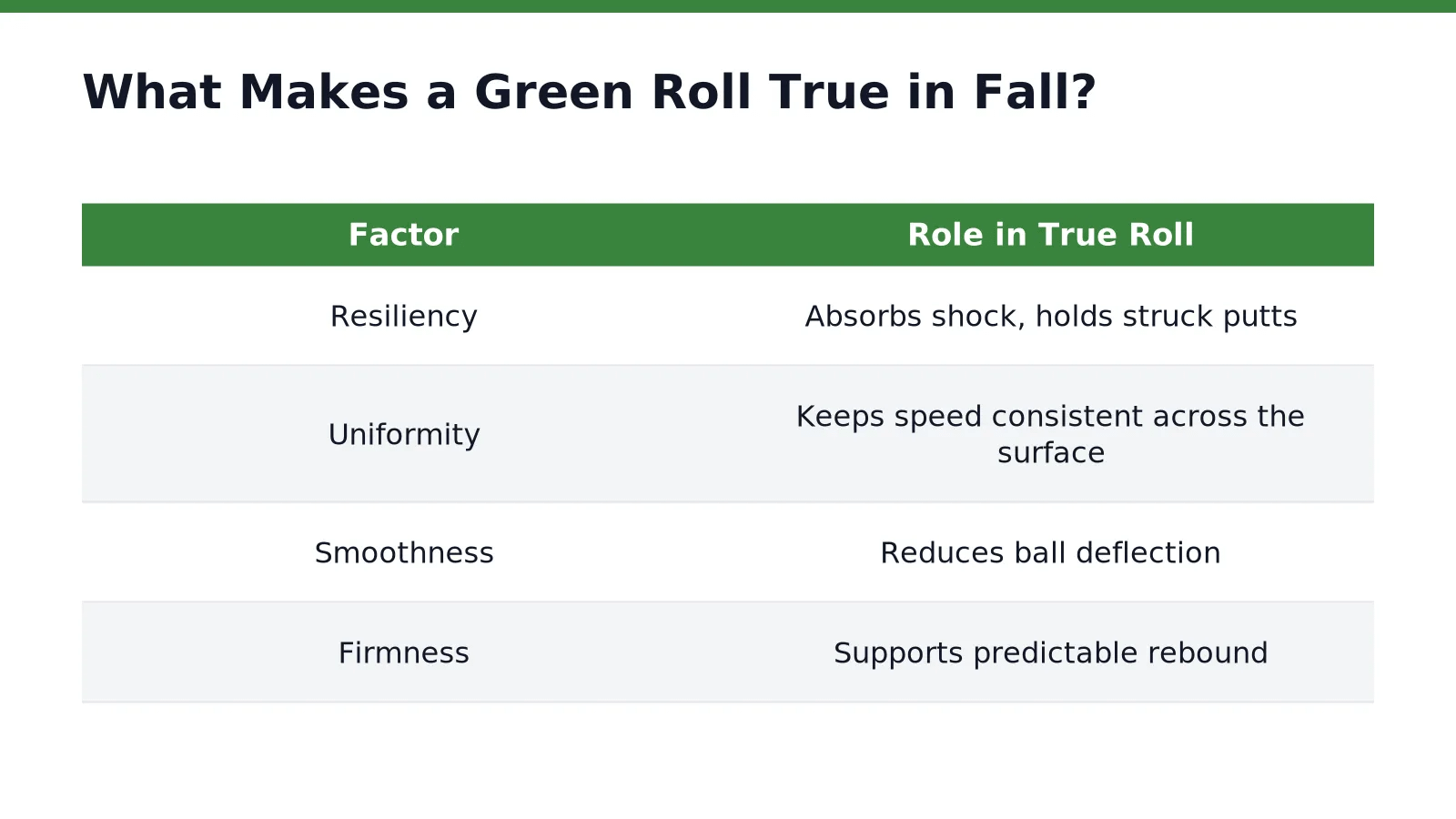
Four factors govern a true roll: resiliency, uniformity, smoothness, and firmness. Together they determine overall green speed and whether a putt breaks the way a golfer expects. Resiliency describes the turf’s capacity to absorb shock, which lets a properly struck shot hold its line instead of bouncing off course.
Late-season conditions test these factors harder than any other stretch of the practice calendar. Cooler temperatures and shifting moisture levels expose weak spots in a surface fast. A backyard putting green fall Colorado homeowners rely on needs construction that holds its speed regardless of the season.
Why Does Uniformity Matter So Much for Late-Season Practice?
Uniformity means every section of the green rolls the same way. Nothing undercuts a practice session faster than a surface that plays fast on one side and sluggish on the other. Players chasing repeatable stroke mechanics during late-season practice need that consistency most, since inconsistent feedback teaches the wrong lessons.
Achieving it is harder than it sounds. Variation in location, construction, and microenvironment makes perfect uniformity nearly impossible to reach by accident.
Can a Custom Design Fix Uniformity Problems?
Deliberate engineering closes the gap that natural variation creates. A custom golf green Castle Rock property owners install, built with attention to base preparation and surface grading, controls for the inconsistencies that plague natural turf. Artificial Grasscapes evaluates each site’s conditions before recommending a configuration suited to year-round, late-season-ready play.
Homeowners ready to address these variables can request a Free Estimate for a late-season-ready putting surface.
Which Stimp Speed Fits Your Backyard Green?
A backyard putting green fall colorado installation performs best between Stimp speeds of 8 and 10, well below the pace found on championship courses. Stimp rating measures how many feet a golf ball rolls on a putting surface during testing, giving homeowners a concrete number instead of a guess. Championship courses typically run from 10 to 13, a notable jump from what most home greens require. That gap matters for late-season practice, when golfers want a surface that rewards technique rather than punishes it.
Starting near a Stimp of 8 builds confidence before speed becomes the focus. This lower rating creates a forgiving roll, letting players groove their stroke without chasing every putt off the green. Pile height and infill density can be adjusted later to dial in faster speeds as skills sharpen through the fall months.
Does Weather Affect a Backyard Green’s Speed?
Grass type, mowing height, weather, and maintenance practices all directly affect playing speed, especially as temperatures shift into fall. Synthetic systems sidestep much of that variability since moisture and temperature swings don’t alter pile consistency the way natural turf does.
A properly specified custom golf green castle rock design accounts for these factors from the start:
- Target Stimp range (8-10 for practice, higher for advanced players)
- Pile height and infill type
- Fringe width and surrounding cuts
Artificial Grasscapes serves Late-Season Practice installations with these specifications built in. A Free Estimate confirms the right speed for any property.

How Should a Custom Green Be Designed?
A custom green starts with a clear practice goal, not a turf sample. Design decisions must address short pressure putts, long lag putts, uphill and downhill rolls, breaks running both left-to-right and right-to-left, and chips from varied lies. Late-Season Practice sessions, when daylight shortens and course access fades, depend on a layout built around these specific skills rather than a generic slab of green turf.
Those answers shape every physical dimension of the surface. Size, shape, surface selection, target speed, cup placement, contours, fringe width, and chipping area all follow directly from how a golfer plans to use the space during Late-Season Practice. Outdoor systems built for Colorado’s Late-Season Practice routines can be engineered with customized speeds, breaks, undulations, and distinct cuts of fringe. Rough, so each session matches real course conditions instead of approximating them.
A well-built green rewards that engineering with a smooth, consistent surface and true ball roll, holding a properly struck putt instead of kicking it offline.
Is a faster green always better for backyard practice?
No. The fastest possible green is not always the best practice green, particularly on a smaller layout built for backyard putting green fall Colorado training. Excess speed combined with steep slope reduces the number of usable putting lines, limiting practice value rather than expanding it.
What makes a custom golf green different from a stock kit?
A custom golf green Castle Rock homeowners request reflects a specific shot list, not a one-size layout. Artificial Grasscapes designs and ships these systems to serve Late-Season Practice needs across Colorado. Owners planning a layout can request a Free Estimate to get started.
Ready to Build Your Late-Season Practice Green?
Late-season practice demands a surface that holds up when temperatures drop and daylight shortens. Artificial Grasscapes, based in Castle Rock, CO, serves homeowners and businesses planning golf turf projects for exactly this window. A properly built green doesn’t lose performance as the season winds down. It gains an advantage over natural turf that goes dormant or muddy.
The company’s golf turf specialty covers practice areas, chipping zones, and putting surfaces designed for year-round use. Fall conditions in Colorado punish bentgrass and ryegrass alike. Synthetic systems sidestep that problem entirely.
What makes a late-season green different from a spring installation?
Timing matters less than the assessment behind it. Each property receives a detailed evaluation of drainage, slope, and sun exposure before any turf gets specified. That process determines whether a backyard putting green fall colorado homeowner wants gets paired with the right pile height, infill, and base structure for cold-weather resilience.
Can a custom green still be tailored for short-game practice?
Yes. A custom golf green castle rock property owner requests can include multiple cup placements, break contours, and chipping aprons regardless of installation season. The team recommends the configuration that matches actual practice habits, not a generic template.
Property owners ready to move forward can request a Free Estimate to start planning before winter weather limits outdoor work further.
FAQ
What Stimp speed works best for backyard putting greens in fall?
Backyard greens play best at a Stimp speed between 8 and 10, well below the 10-to-13 range on championship courses. This range suits the shorter, colder sessions typical of late-season practice.
What factors make a putting green roll true during fall?
Resiliency, uniformity, smoothness, and firmness govern a true roll and determine overall green speed. Resiliency lets a properly struck putt hold its line instead of bouncing off course, especially as cooler temperatures and moisture shift.
Where does Artificial Grasscapes design custom putting greens for fall practice?
Artificial Grasscapes, based in Castle Rock, CO, designs custom putting surfaces with precise cup placement, contours, and target speeds. The company serves late-season practice needs across Colorado properties with custom golf turf installations.
Conclusion
In closing, a custom putting green engineered for late-season practice transforms Colorado’s fall conditions from a limitation into an advantage. The right Stimp speed, pile specification, and contour design reward technique over luck, building confidence when daylight fades and course access narrows. Artificial Grasscapes delivers surfaces that hold their performance through winter while natural turf falters, giving serious golfers the consistent practice platform their game demands when it matters most.
Related posts:
 Commercial Turf Subcontracting in Colorado Springs: Comprehensive GC Scope and Specification Guide for Synthetic Turf Installation
 Commercial Playground & Daycare Turf Safety: ASTM F1292 Fall Height and ADA Compliance Essentials
 High-Margin Turf Upselling Guide for Front Range Custom Home Builders: Cost, Packages, and Benefits