
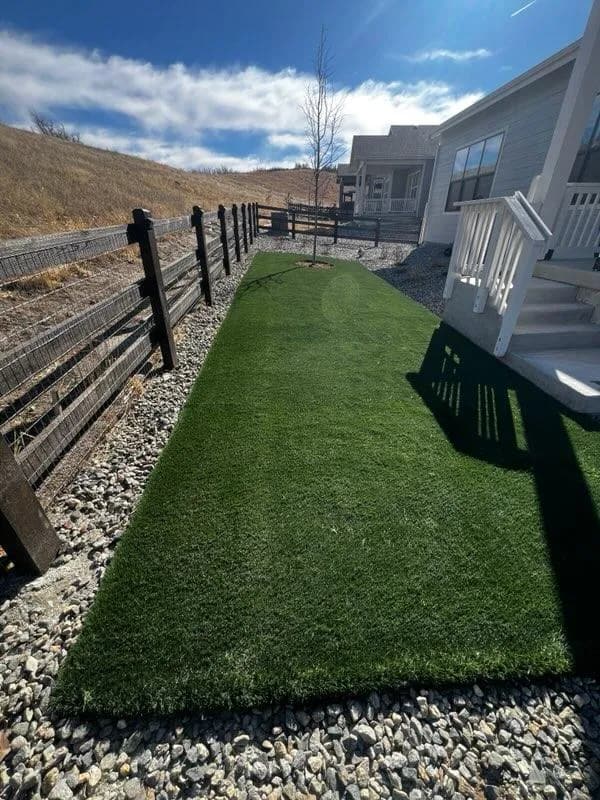
Premium synthetic turf backing from Artificial Grasscapes withstands Castle Rock and Colorado Springs winters by resisting repeated freeze-thaw expansion and contraction that cracks traditional surfaces. Engineered drainage holes release meltwater from heavy snowbanks before ice forms, preventing backing deterioration. This durability delivers a low-maintenance, year-round green landscape with minimal upkeep required.
Key Takeaways
- Freeze-thaw cycles expand and contract soil, creating unstable ground conditions that threaten landscape integrity.
- Water seeping into material pores freezes and expands, widening cracks and forcing particles apart.
- Temperature swings above and below freezing within single days accelerate deterioration of exterior surfaces.
- Premium backing materials withstand repeated freeze-thaw pressure cycles common in Castle Rock’s Colorado winters.
What Happens When Snow Melts And Refreezes?
Repeated thawing and freezing puts real stress on outdoor surfaces across Colorado properties. Temperatures climb above 32°F during the day, melting snow and ice, then drop back below freezing overnight, locking that moisture in place again. This cycle repeats throughout winter, and over time it tests the backing and drainage systems of any yard surface, natural or synthetic.
Traditional lawns already struggle under Colorado’s shifting climate. Dry patches and heavy water demands plague many properties even before winter arrives, leaving homeowners with a yard that never quite looks right.
Does Artificial Turf Hold Up Through Winter Freeze-Thaw Swings?
Properly installed synthetic turf is built to manage this seasonal back-and-forth. Freeze thaw artificial turf durability depends heavily on drainage design, which is why Artificial Grasscapes evaluates each property’s exposure and water flow before recommending a system suited to local conditions.
Why Does Snow Resistance Matter For Colorado Yards?
Snow resistance protects against pooling, ice buildup, and backing damage. Strong synthetic grass snow resistance colorado installations rely on engineered drainage layers that move meltwater away quickly.
Benefits homeowners gain include:
- Water conservation compared to traditional grass
- Pet-friendly, low-maintenance footing year-round
- Consistent appearance through freeze-thaw swings
Why Does Premium Backing Resist Winter Cracking?
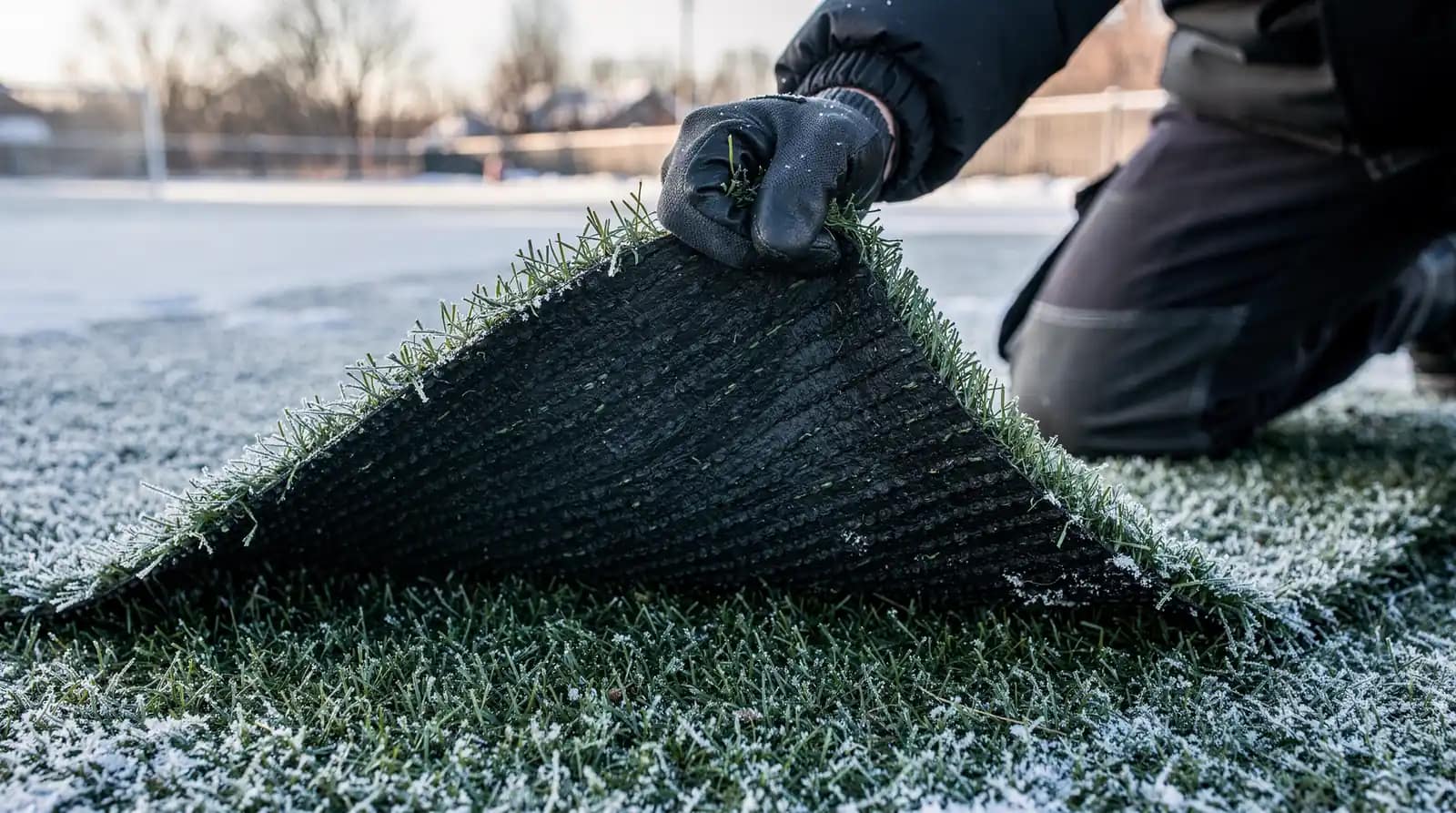
Advanced backing construction gives premium turf lines the structural stability needed to survive Colorado’s temperature swings without splitting or buckling. Fusion Luxury, for instance, relies on an engineered backing system built for added stability, letting the surface withstand heavy seasonal use rather than weakening under repeated freeze and thaw. This matters for anyone evaluating freeze thaw artificial turf durability before committing to a landscaping upgrade.
Manufacturing origin plays a role, too. Produced in the United States, Fusion Luxury benefits from tight quality control over both backing materials and fiber composition, a level of oversight that’s harder to guarantee with imported alternatives. Colorado homeowners lean on that consistency, trusting fibers built to hold their shape and color through repeated winters.
How does artificial turf compare to concrete in freezing conditions?
Rigid surfaces respond to freeze-thaw stress very differently than engineered turf systems. Concrete driveways, for example, often crack, heave unevenly, and flake once repeated freezing, heavy snow, and constant shoveling take their toll. Turf backing, by contrast, flexes rather than fractures, which supports better synthetic grass snow resistance colorado properties across patios, yards, and walkways.
Property owners ready to protect their landscape through another Colorado winter can request a Free Estimate to review backing options suited to heavy seasonal use.

How Does Synthetic Grass Handle Colorado Snow?
Quality synthetic turf sheds snow and resists freeze damage far better than natural grass or exposed concrete. Synthetic grass snow resistance in Colorado depends heavily on backing quality and drainage design, since repeated freezing and thawing puts real mechanical stress on any outdoor surface. A single Colorado winter can swing above and below freezing dozens of times. Each swing is a potential stress event for yard materials and backing systems.
The physics explains why weak products fail. Freezing water expands by just over 9%, generating pressures intense enough to fracture solid rock. That same expansion force works against low-grade turf backing, porous infill, or poorly drained bases, which is exactly why freeze thaw artificial turf durability hinges on engineered drainage and resilient materials rather than surface appearance alone.
Does snow damage artificial turf?
Properly installed synthetic turf with adequate drainage does not suffer structural damage from snowfall or ice. Problems arise when backing is weak or water pools beneath the surface, allowing freeze-thaw cycling to stress seams and stitching over time.
What should Castle Rock homeowners look for before installing?
Homeowners should ask about backing durability, infill type, and base preparation suited to cold climates. Artificial Grasscapes keeps a fully stocked Castle Rock showroom carrying the largest supply of artificial grass products at the best prices in the state. Knowledgeable local experts also walk customers through proper installation steps for lasting cold-weather performance. A Free Estimate helps homeowners compare options before committing.
What Should Colorado Buyers Ask Before Installing?
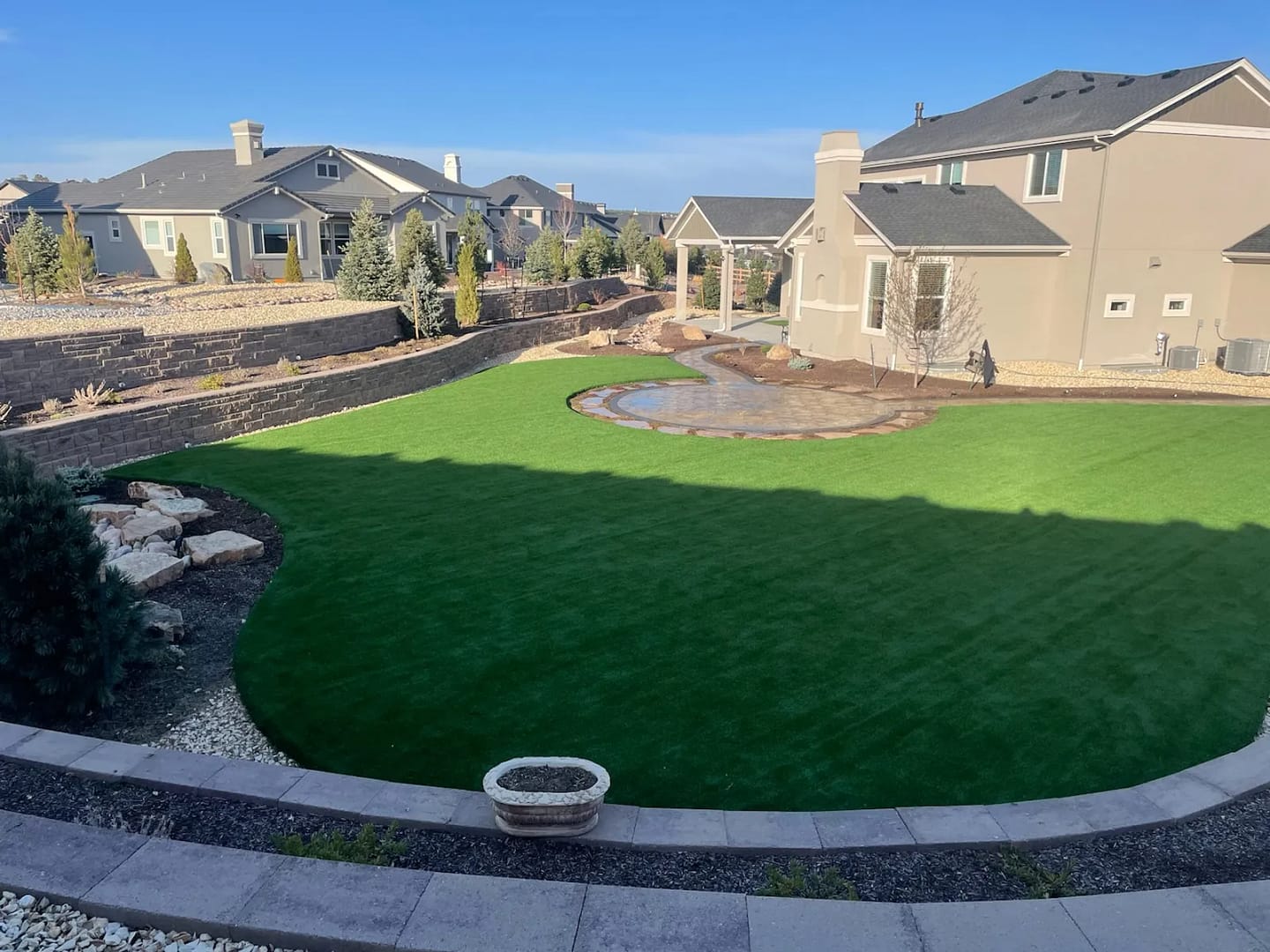
Smart buyers ask three questions before signing an installation contract: who assesses the property, how does the turf handle winter cycling, and what happens near de-icing zones. Colorado’s freeze and thaw pattern punishes shortcuts, so these questions separate a lasting lawn from a disappointing one.
Does the Company Assess the Property First?
A proper installer evaluates drainage, slope, and sun exposure before any turf gets ordered. Artificial Grasscapes, based in Castle Rock, Colorado, treats every project as more than laying down material. The company’s approach starts with a full site assessment, which matters most when freeze thaw artificial turf durability depends on correct base preparation.
How Does Synthetic Grass Handle Snow and Ice?
Properly installed turf drains melted snow instead of trapping it, supporting reliable synthetic grass snow resistance colorado winters demand. Concrete, by contrast, absorbs de-icing salt brine, which accelerates surface deterioration through water absorption and chemical breakdown. Synthetic turf backing sidesteps that risk entirely, since there’s no porous surface for salt to degrade.
Buyers should also confirm:
- Local presence for seasonal follow-up questions
- Drainage specifications suited to freeze-thaw soil movement
- A lush, long-term landscape result, not just a quick install
Working with a Castle Rock based team gives buyers a nearby point of contact when winter questions arise.
FAQ
How does engineered drainage prevent backing damage from snowbanks?
Drainage holes release meltwater from heavy snowbanks before it refreezes into ice, stopping the trapped moisture that would otherwise widen cracks and deteriorate the backing material.
What makes Fusion Luxury backing resist freeze-thaw cracking?
Fusion Luxury uses an engineered backing system built for stability, allowing it to withstand heavy seasonal use without splitting or buckling under repeated Colorado freeze and thaw cycles.
Why does US manufacturing matter for freeze-thaw durability?
Producing Fusion Luxury in the United States allows tight quality control over backing materials and fiber composition, giving Castle Rock homeowners fibers that hold shape and color through repeated winters.
Conclusion
In closing, freeze-thaw durability separates premium synthetic turf from inferior alternatives, and that distinction matters most in Colorado’s demanding climate. Engineered backing systems flex rather than fracture under repeated temperature swings. Proper drainage and quality materials work together to protect your investment through countless winter cycles. When you prioritize backing construction and site assessment before installation, your landscape resists the cracking, heaving, and deterioration that plague concrete and natural grass. The result is a resilient, low-maintenance yard that performs reliably season after season, regardless of how harsh the freeze-thaw pattern becomes.
Related posts:
 Why Commercial Developers are Choosing Synthetic Turf for New Projects
 Multi-Family & HOA Common Area Turf Specifications in Castle Rock: Expert Commercial Artificial Turf Installation and Pet-Friendly Solutions
 Rooftop & Courtyard Synthetic Turf Engineering: Weight Loads and Fastening Systems Explained for Optimal Installation