

Colorado homeowners should clear snow promptly after it stops falling since it hardens and gets heavier the longer it sits. Artificial turf installed by Artificial Grasscapes drains quickly and resists ice buildup compared to natural grass, requiring only a plastic shovel or broom for clearing without damaging synthetic fibers underneath.
Key Takeaways
- Winter snow removal protects property access and prevents hazards for Colorado homeowners year-round.
- Pre-winter lawn preparation directly determines how quickly grass recovers in spring after heavy snow.
- Safe snow removal requires professional techniques to protect driveways, sidewalks, and surrounding landscape features.
- Colorado homeowners must maintain winter lawn care practices before and during snow accumulation, regardless of which Front Range community they call home.
Why Does Snow Removal Timing Matter in Colorado?
Timing determines whether snow on a Colorado property stays light and easy to clear or compacts into a dense, icy layer. Fresh snow lifts away in minutes; snow left sitting overnight turns heavy and far harder to move. Delayed clearing on driveways, walkways, and turf areas raises the risk of slick ice patches and damage that costs more to fix later.
Prompt artificial turf snow removal protects synthetic lawns from the weight of accumulated snow while keeping pathways safe for foot traffic. Colorado’s Front Range sees storms that drop snow in short, intense bursts, followed by freeze-thaw cycles that lock loose snow into ice. Clearing a property right after a storm stops prevents that transition from fluffy to frozen.
Should Snow Be Cleared All at Once or in Stages?
Heavy, prolonged snowfall calls for clearing in stages rather than waiting for the storm to end. Removing a few inches at a time keeps the workload manageable. Staged clearing also prevents dangerous buildup on steps, driveways, and turf surfaces alike.
Why Not Wait Until the Storm Passes?
Waiting turns light snow into a compacted, icy mass that resists shovels and scrapers. For homeowners shoveling artificial grass during a Colorado winter, early and consistent clearing protects both safe access and the turf’s long-term performance. Proper snow removal, after all, serves safety and property protection first, convenience second.
What Snow Removal Tools Work Best Here?
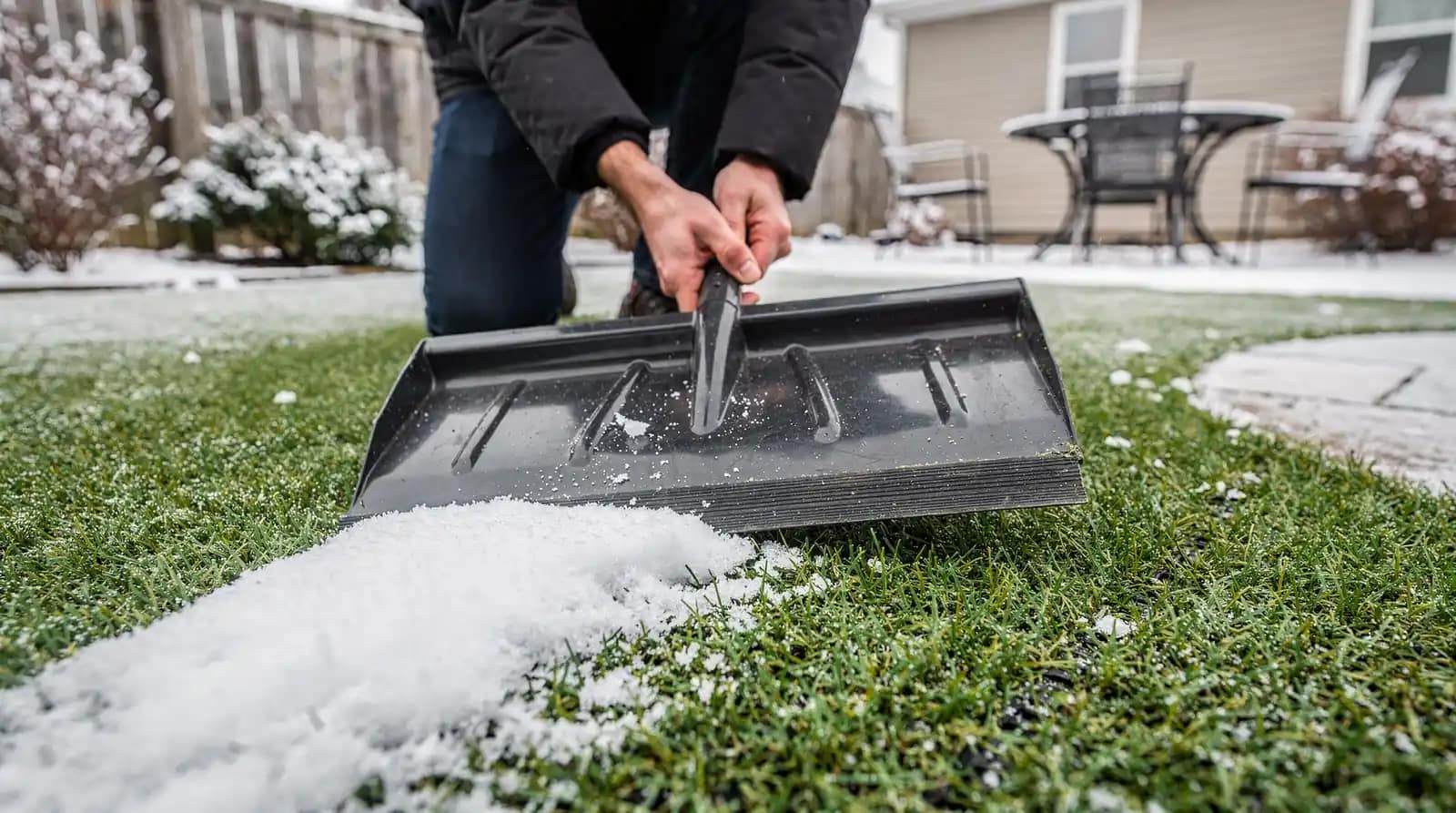
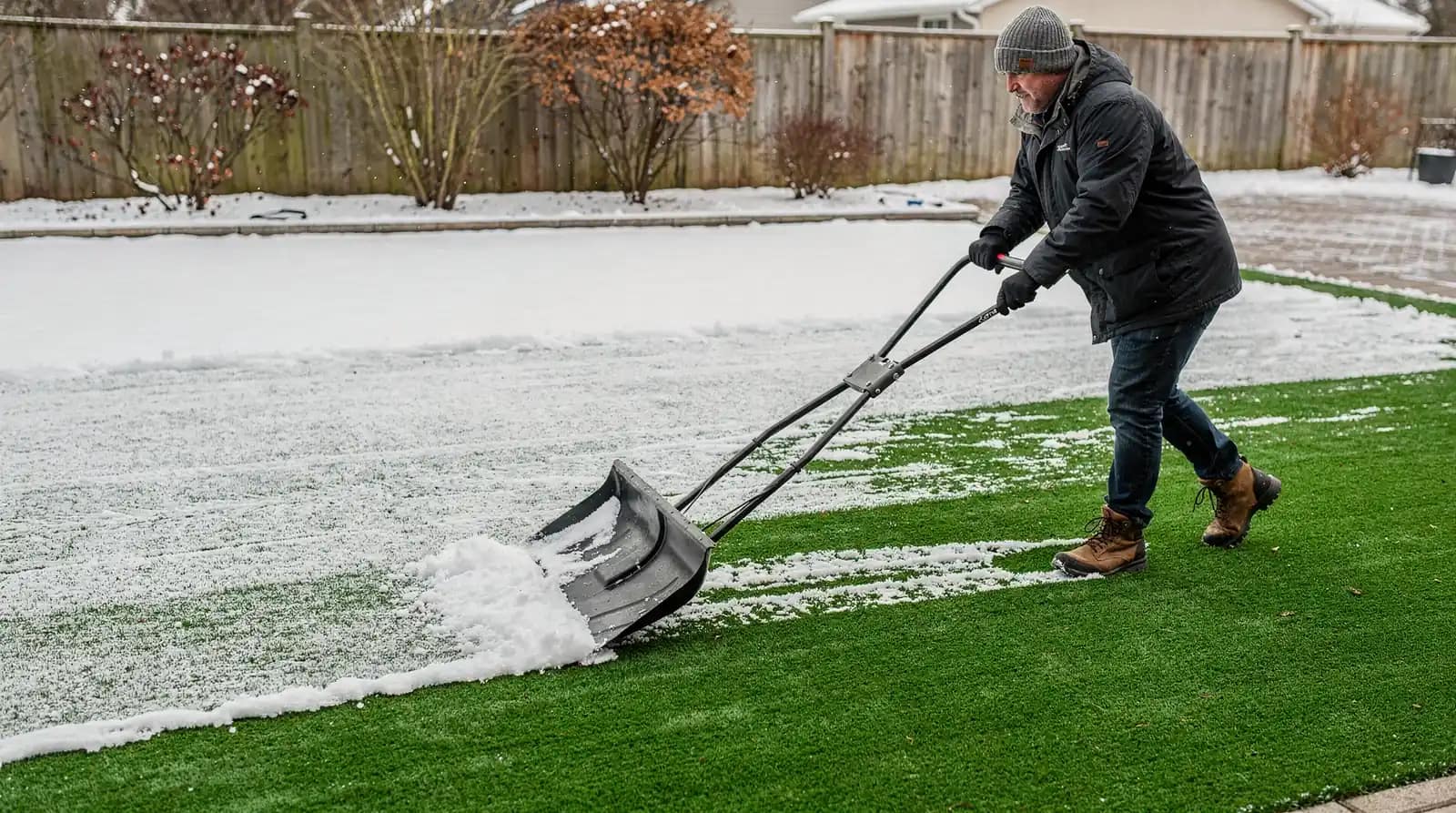
The right tool depends on snow type, surface area, and how much ice has bonded to the ground. Colorado’s Front Range sees everything from light powder to heavy, wet accumulation, so a single shovel rarely covers every storm. Matching equipment to conditions protects both the homeowner’s back and the surface underneath, whether that surface is a concrete walkway or a synthetic lawn.
An ergonomic shovel with a curved handle reduces back strain compared to a standard straight-handled model. The curve lets the body stay more upright while pushing or lifting snow, which matters during long clearing sessions. Blade material matters just as much as handle design.
Which shovel blade works best for Colorado snow?
Plastic blades glide easily through light, fluffy powder without adding unnecessary weight. Metal-edged blades cut through packed snow and ice far more effectively, making them the better choice after a freeze-thaw cycle.
Is a snow blower worth it for a Colorado driveway?
Driveways and larger paved areas call for a snow blower rather than manual shoveling. The equipment saves considerable time and physical energy during frequent storms. For synthetic lawn areas specifically, plastic-edged tools paired with careful technique keep clearing efficient without damaging the turf fibers underneath.
How Do You Protect Natural Lawns From Winter Damage?
Natural lawns across Colorado survive winter based on decisions made before the first heavy snowfall, not after. Pre-season prep and careful traffic management dictate how fast grass greens up once spring arrives. Neglect invites compaction and disease that linger into April.
Front Range homeowners search for snow mold prevention and winter lawn protection every year for good reason. A patchy, fungus-damaged lawn is a common springtime complaint across Colorado’s metro areas, and most of that damage traces back to how the yard was treated during accumulation, not after the thaw.
What Causes a Patchy Lawn After Snow Melts?
Heavy foot traffic on frozen or snow-covered grass compresses blades and soil, leading to compaction that chokes root systems. That stress, combined with trapped moisture under snowpack, creates ideal conditions for fungal disease to take hold and surface as dead patches come spring.
Does Walking on Snow-Covered Grass Damage It?
Yes, repeated walking or shoveling snow onto the same grass patches crushes dormant blades and compacts the soil beneath. Rerouting foot traffic and shaking snow off a few inches at a time, rather than piling it in one spot, reduces this damage substantially.
Proactive winter lawn care generally includes:
- Limiting foot traffic across snow-covered areas
- Avoiding piling shoveled snow in concentrated mounds
- Watching for early signs of snow mold as melt begins
- Keeping grass trimmed to a manageable height before the first snowfall
These habits protect root health and set up a lush, vibrant green-up once winter finally releases its grip.
How Does Artificial Turf Ease Winter Snow Care?
Synthetic lawns cut winter yard work down to a fraction of what traditional grass demands. Snow still falls, but the labor of protecting a lawn underneath it disappears. Colorado’s climate punishes natural grass with dry patches and heavy irrigation needs even before winter arrives. Synthetic turf sidesteps that cycle entirely, giving properties a resilient surface built for the Front Range’s swings between snow, sun, and dry wind.
Artificial Grasscapes designs every installation with Colorado’s climate in mind, factoring drainage and seasonal exposure into the planning process from day one. That groundwork matters most in winter, when melting snow needs somewhere to go.
Does snow damage artificial grass?
No. Properly installed synthetic turf tolerates snow load, freeze-thaw cycles, and foot traffic without matting permanently or developing bare spots. The backing and infill resist the compaction that damages natural lawns under heavy snow.
Is shoveling artificial grass safe in winter Colorado conditions?
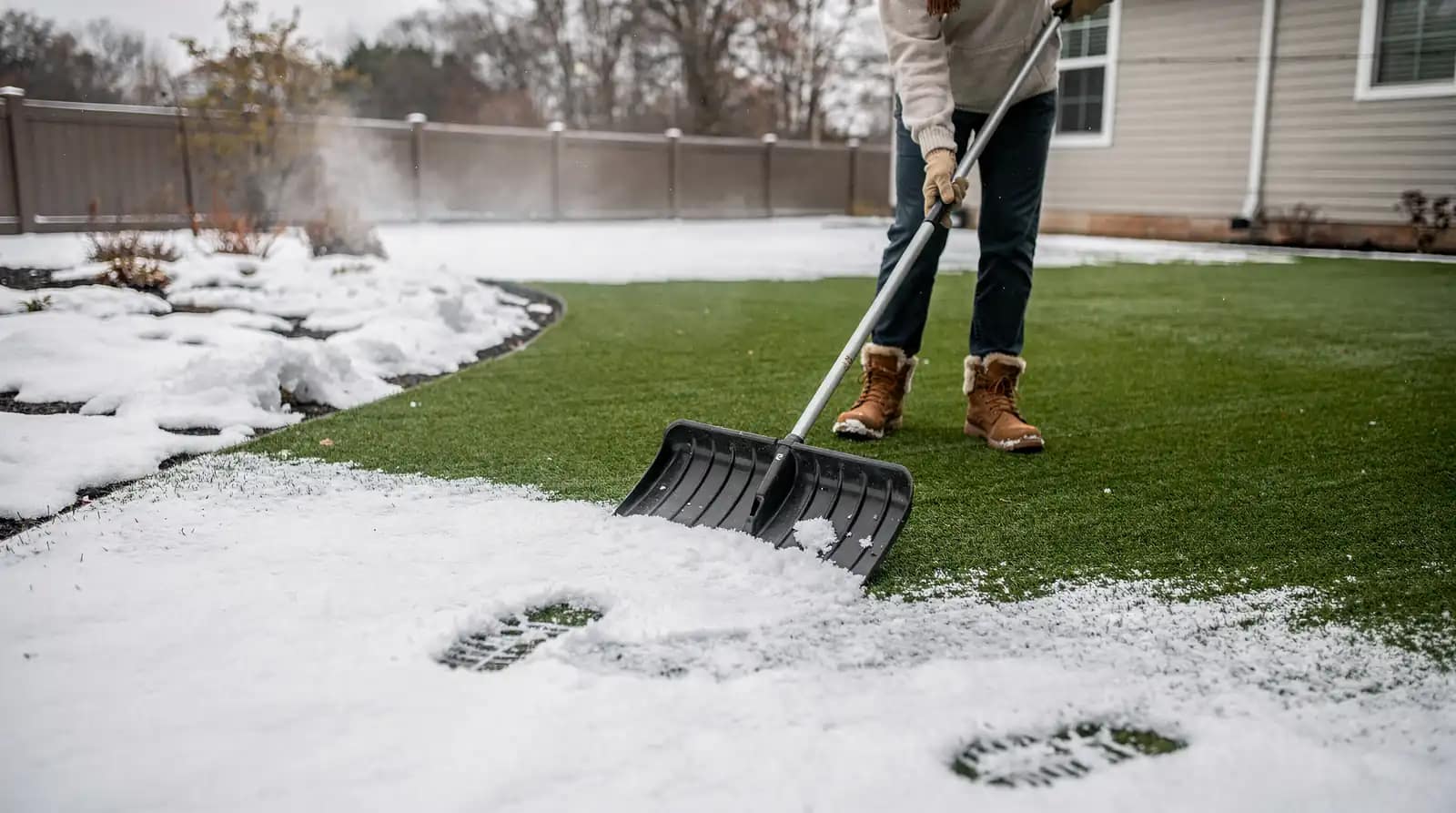
Light shoveling is safe when done with a plastic blade rather than a metal edge, which can nick the turf fibers. Most property owners simply let snow melt naturally, since the engineered drainage layer below the surface moves water away quickly.
Colorado property owners, from Castle Rock to Colorado Springs, Douglas County, El Paso County, and the greater Denver Metro area, rely on this approach for winter resilience. For homeowners preparing a lawn ahead of the first snowfall, requesting a Free Estimate is the practical first step toward a low-maintenance yard built for Colorado winters.
FAQ
How soon should homeowners clear snow from artificial turf?
Homeowners clear snow immediately after it stops falling. Fresh snow lifts away in minutes while snow left overnight compacts into a dense, icy layer that’s harder to remove.
What tool should Colorado homeowners use on artificial turf?
Artificial Grasscapes turf drains quickly and resists ice buildup. A plastic shovel or broom clears it effectively without damaging the synthetic fibers underneath.
Should homeowners clear heavy snowfall all at once?
Heavy, prolonged snowfall calls for clearing in stages rather than waiting for the storm to end, since removing a few inches at a time prevents dangerous buildup on turf and walkways.
Conclusion
In closing, Colorado homeowners who prioritize winter preparedness protect both their safety and their property’s long-term resilience. Whether managing natural grass through careful traffic control and proactive snow removal or choosing synthetic turf engineered for Front Range conditions, the foundation remains the same: consistent, timely action during winter storms prevents compaction, damage, and costly spring recovery. Colorado properties, across Castle Rock, Colorado Springs, Douglas County, El Paso County, and the greater Denver Metro area, thrive when winter yard care aligns with the region’s demanding climate. Starting with the right approach now ensures a healthier, more manageable landscape through every season ahead.
Related posts:
 Navigating Municipal Turf Bids in El Paso County: Expert Guidance for Parks, Recreation & Public Works
 Patio Paver and Synthetic Turf Grid Design: Expert Installation and Maintenance for Luxury Outdoor Living in Colorado Springs
Castle Rock Water Rebates & Turf Conversion Guide: Maximizing Douglas County Utility Cost Savings with Artificial Turf