

By Dakota Carino, Artificial Grasscapes
Navigating the complexities of “synthetic turf installation” in areas with freeze-thaw soil conditions can be challenging. Understanding the implications of these unique soil characteristics is crucial for ensuring the longevity and performance of your turf. This article delves into the specific requirements for synthetic turf bases and drainage solutions designed for Colorado climates, particularly focusing on freeze-thaw cycles. Readers will learn about installation techniques, drainage solutions, material selection, and effective maintenance strategies. Addressing these components effectively can prevent issues such as frost heave and waterlogging, ultimately enhancing the durability of synthetic turf.
Understanding Freeze-Thaw Soils
Freeze-thaw soils undergo cyclical changes that can significantly impact turf installation stability. These soils expand when frozen and contract upon thawing, creating tension that may lead to frost heave. This dynamic can cause synthetic turf to lift or create uneven surfaces, compromising its aesthetic and functional qualities. A thorough understanding of these soil behaviors is essential for selecting proper installation techniques and materials that can withstand these environmental conditions.
Installation Techniques
Implementing the right installation techniques is fundamental in ensuring a successful synthetic turf project over challenging freeze-thaw soils. Key steps include:
- Site Preparation: Clear the area of debris and ensure a level surface to promote water drainage.
- Base Layer Installation: Use engineered turf bases or permeable drainage systems that allow for proper water flow, reducing the risk of waterlogging.
- Compaction: Properly compacting the base layer is critical to minimize future shifting or settling.
“Artificial Grasscapes” specializes in synthetic turf solutions tailored for the Colorado climate, particularly addressing challenges posed by freeze-thaw soils.
What Is Freeze-Thaw Soil and Its Impact on Turf Installation?
Freeze-thaw soil refers to ground that experiences repeated cycles of freezing and thawing throughout the year. This type of soil can lead to significant instability beneath turf installations as the ground shifts. An effective installation compensates for these changes through careful design and materials that accommodate the fluctuations without causing damage to the turf.
Why Is Addressing Soil Expansion and Contraction Critical for Turf Longevity?
Managing soil expansion and contraction is critical in preserving turf integrity. If left unaddressed, these movements can lead to significant wear and tear on the synthetic surface. Implementing proper base and “drainage solutions” helps stabilize the turf and mitigate the effects of these cycles, ensuring that the installation remains durable over time.
Drainage Solutions
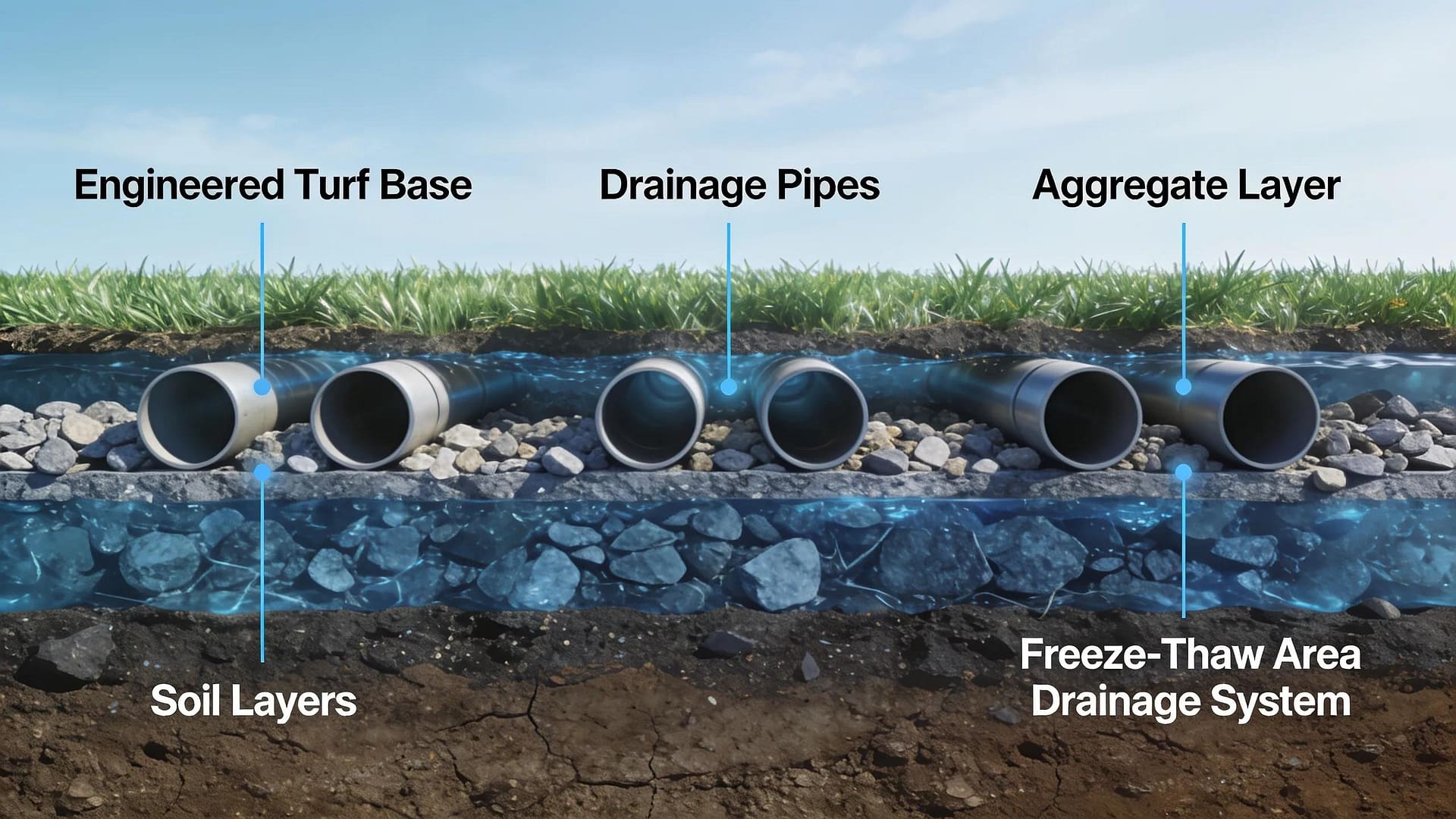
Effective drainage solutions are essential for managing water around synthetic turf installations in freeze-thaw zones. Various systems can be utilized to enhance water management, including:
- Standard Drainage Channels: These facilitate quick water runoff, helping to maintain a stable surface.
- Permeable Base Layers: Utilizing crushed stone or gravel can improve drainage capacity and reduce water retention.
- Integrated Drainage Components: Implementing perforated piping within the base can effectively prevent waterlogging.
Additionally, investing in regular maintenance ensures that these systems function optimally, further enhancing turf longevity and performance.
What Are the Best Permeable Aggregate Base Specifications for Colorado Turf Drainage?
When selecting aggregate for the drainage base, it is vital to choose materials that allow for effective permeability. Ideal specifications include:
- Crushed Stone: This should have angular edges to promote interlocking, providing greater stability.
- Gravel: Use a clean aggregate that prevents clogging while enabling proper drainage flow.
- Geotextile Fabric: Consider this layer to separate the soil from the aggregate, preventing unwanted infiltration that can lead to blockage.
How Thick Should the Permeable Base Be for Effective Water Management?
For effective water management, the permeable base should be installed at a thickness of at least 4-6 inches. This thickness allows for sufficient water retention and dispersal while resisting compression due to traffic loads. Importantly, a slight slope should be established to channel water away from the turf surface efficiently.
How Is Drainage Engineering Designed for Synthetic Turf Over Freeze-Thaw Soils?
Drainage engineering for synthetic turf on freeze-thaw soils incorporates principles of civil engineering practices. Key design considerations include:
- Material selection: Using high-quality permeable aggregate and drainage fabrics ensures longevity.
- System layout: Implement a design that promotes efficient water runoff, considering the natural landscape slopes.
- Regular inspections: Ensure that the drainage systems remain unobstructed and function as intended.
What Drainage Components Are Integrated to Prevent Waterlogging?
A comprehensive drainage system may incorporate various components to forestall waterlogging:
- Perforated Pipes: These allow for efficient runoff while preventing surface pooling.
- Catch Basins: Installed at low points to collect excessive water, reducing surface saturation.
- French Drains: Useful in redirecting water away from the turf and preventing moisture build-up.
How Does Proper Drainage Installation Enhance Turf Performance and Durability?
Proper drainage installation is pivotal in enhancing turf performance and durability. Effective drainage systems prevent prolonged moisture exposure, which can lead to mold growth and surface deterioration. Additionally, well-drained turf can recover from foot traffic more efficiently, maintaining its appearance and functionality.
Material Selection
Choosing appropriate materials for synthetic turf installation in freeze-thaw zones is vital. Recommended materials include:
- UV-Resistant Turf: Ensures the longevity of color and texture against sun damage.
- Quality Infill Materials: Selecting infill that supports blade integrity without compromising drainage is essential.
- Durable Backing Systems: Advanced backing technology can improve drainage and support turf stability.
Maintenance Strategies

Regular maintenance strategies for synthetic turf in harsh climates can significantly prolong its lifespan. Recommended strategies include:
- Routine Inspections: Conducting regular checks for uneven wear or drainage issues allows for quick interventions.
- Clearing Debris: Removing leaves and dirt prevents clogging of the drainage system.
- Repair Strategies: Addressing minor tears or distress promptly can mitigate larger repair needs over the long term.
What Installation and Maintenance Practices Ensure Turf Base Longevity in Freeze-Thaw Zones?
To ensure the longevity of turf bases in freeze-thaw zones, focus on installation practices that include:
- Detailed Site Assessments: Evaluate soil conditions before installation to select suitable materials.
- Quality Control During Installation: Ensure that methods conform to best practices to avoid future issues.
- Seasonal Maintenance Routines: Adapt maintenance tasks based on seasonal weather patterns to preserve turf health.
What Is the Step-by-Step Installation Workflow for Synthetic Turf Bases?
Effective installation of synthetic turf bases follows a clear workflow:
- Pre-Installation Planning: Analyze soil conditions and establish a plan.
- Excavation: Remove existing soil to make room for the base.
- Base Layer Installation: Place and compact the engineered base.
- Turf Placement: Lay the synthetic turf fibers and secure adequately.
- Final Touches: Perform grooming and infill application as needed.
How Should Drainage Systems Be Maintained to Prevent Turf Damage?
To maintain drainage systems effectively and prevent turf damage, consider:
- Regular Inspection Frequencies: Inspect systems at least twice a year or after significant weather events.
- Clearing of Blockages: Ensure that channels and pipes remain free of debris to promote optimal flow.
- Repair Strategies: Quickly address any damaged components to prevent systemic failures.