
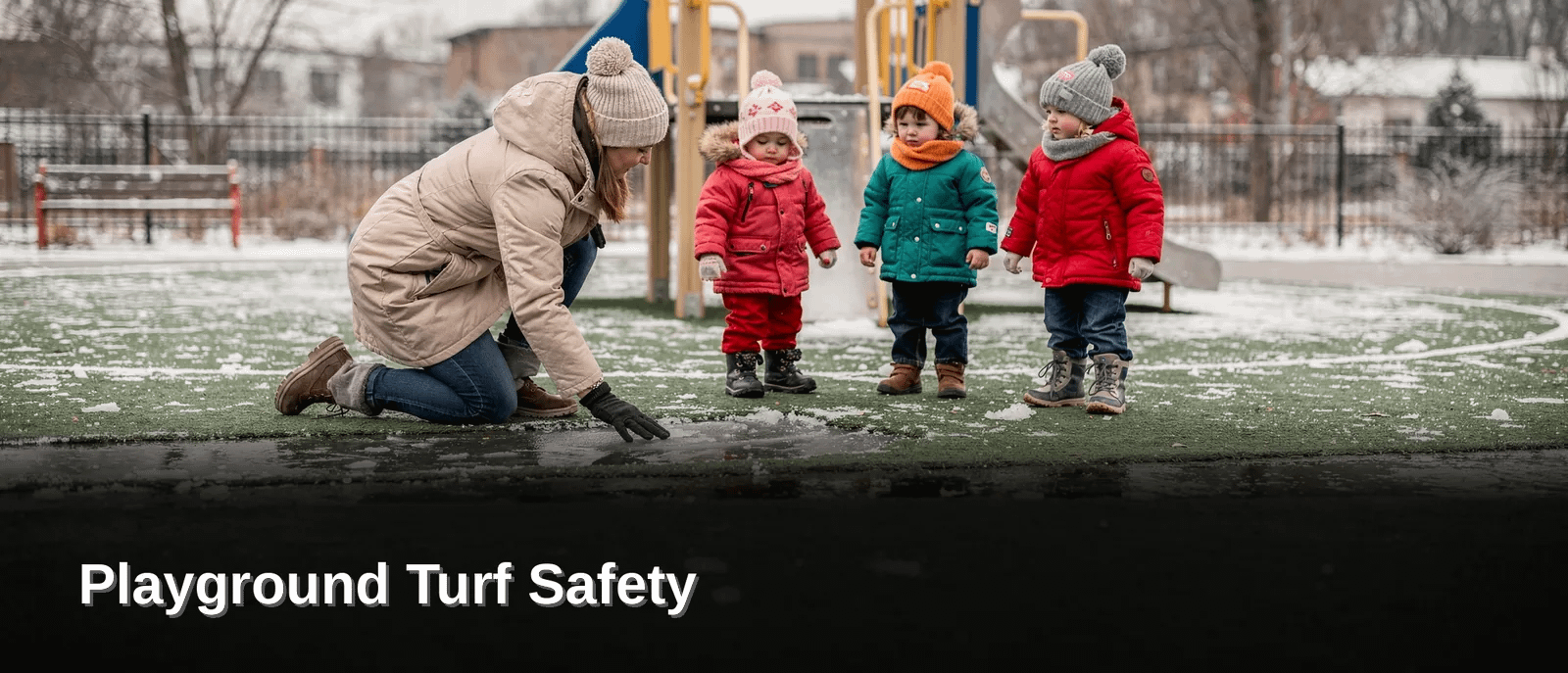
Compacted ground poses year-round risk: falls cause over 75% of playground injuries, and frozen mulch, sand, or gravel loses impact attenuation exactly when children need it most. Artificial Grasscapes, serving Castle Rock, CO, designs ASTM F1292-tested play surfacing engineered to maintain consistent fall-height protection through Colorado’s freeze-thaw cycles.
Key Takeaways
- Falls account for over 75% of all playground-related injuries, making impact attenuation critical for safety.
- ASTM F1292 standards establish specific requirements for playground surface impact absorption and fall-height protection.
- Proper surfacing directly prevents serious injuries, especially head trauma, during inevitable playground falls.
- Artificial Grasscapes designs winter fall-height safe play areas meeting ASTM F1292 compliance standards.
Why Does Winter Threaten Daycare Playground Safety?
Freezing temperatures turn soft natural surfaces into hard, compacted ground, stripping away the cushioning that protects falling children. Falls account for over 75% of all playground-related injuries, according to the Centers for Disease Control and Prevention, making the condition of the surface beneath the swings and climbers a year-round safety priority, not just a summer concern. Playground turf safety fall height ratings depend on consistent surfacing performance, and ice, frost, and snow compaction compromise that consistency fast.
Impact attenuation, the surface’s ability to absorb fall force and reduce the risk of life-threatening injury, only works when the material stays resilient. Mulch freezes solid. Sand clumps and hardens. Pea gravel shifts unevenly under ice. Federal playground safety guidance has long cautioned against hard sub-surfaces beneath climbing equipment, and Colorado’s freeze-thaw cycles push many traditional ground covers straight into that danger zone.
Why does Colorado’s climate make this worse?
Colorado’s temperature swings create surfacing inconsistencies that natural materials struggle to handle. Daycare operators often watch dry patches, moisture pooling, and sudden freezes change their playground surface conditions week to week, sometimes day to day.
Is there a more stable winter alternative?
Daycare artificial grass Colorado installations use engineered infill and drainage systems designed to resist compaction and maintain consistent cushioning through freeze-thaw cycles. Property owners weighing a surfacing upgrade before winter can request a Free Estimate to review options suited to their site’s exposure and equipment heights.
What Do ASTM F1292 And F2075 Require?
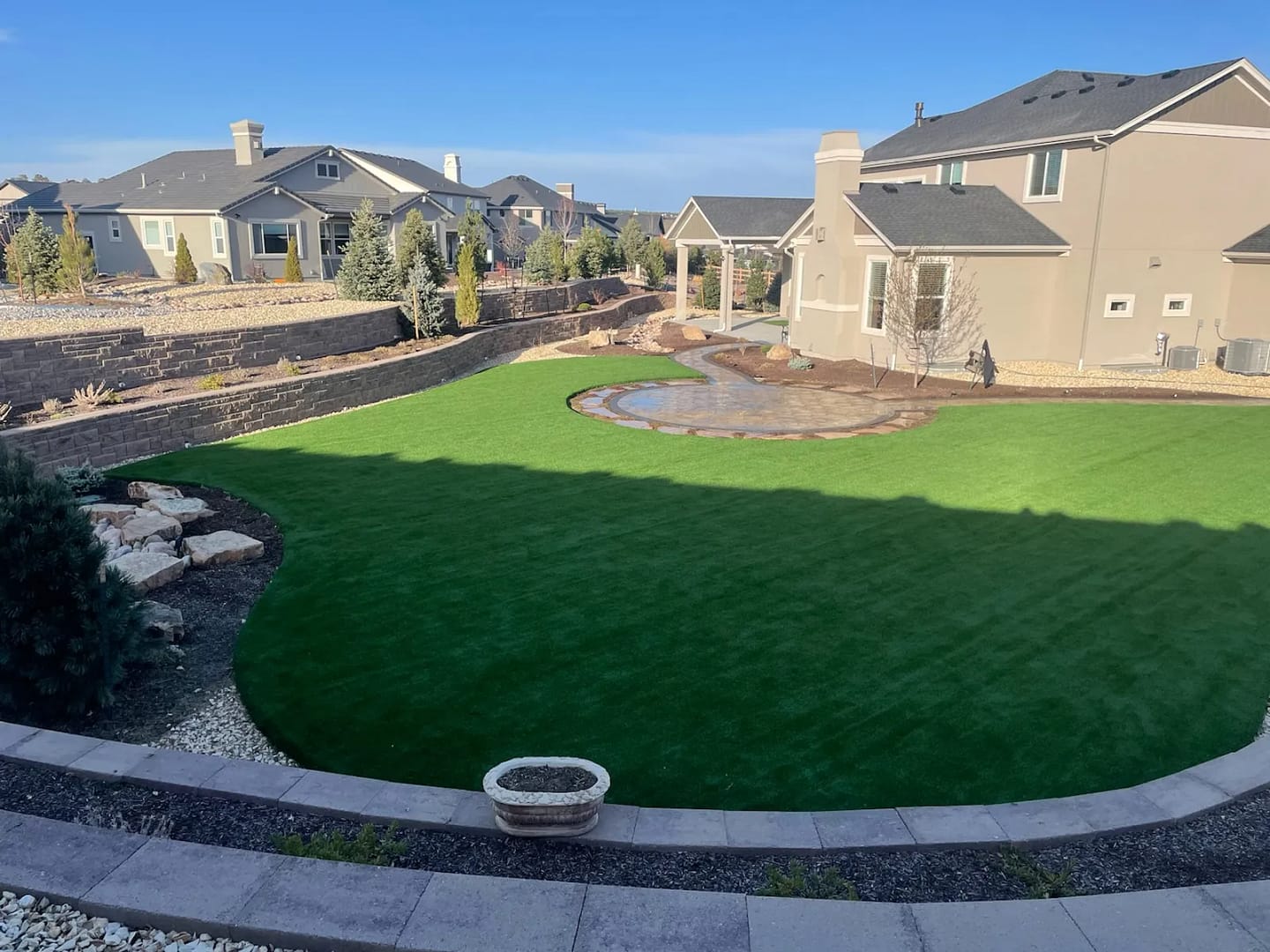
Two ASTM standards govern how a play surface must absorb force: F1292 and F2075. Together they set the technical bar for playground turf safety fall height performance, dictating how much shock a surface must absorb beneath swings, slides, and climbing structures. Property owners planning a play area in Castle Rock or Colorado Springs benefit from understanding both before equipment ever arrives on site.
F1292 measures impact attenuation, the surface’s ability to cushion a fall and reduce head injury risk. F2075 addresses the engineered wood fiber and loose-fill materials often compared against synthetic turf systems. Neither standard exists in isolation; each works to lower injury risk while still allowing for a lively, usable play environment rather than an overly restrictive one.
Why Do These Standards Matter So Much For Daycares?
Falls account for over 75% of all playground-related injuries, according to the Centers for Disease Control and Prevention. That figure makes surface testing a central safety concern for any licensed care facility. Choosing daycare artificial grass Colorado providers install should always reference compliance with these standards, not just general cushioning claims.
When Should Surface Planning Happen?
Surface planning belongs at the start of a project, not after equipment selection. Spacing, fall zones, and surfacing depth all depend on decisions made before installation day. Property owners requesting a Free Estimate gain the chance to align equipment choices with surfacing requirements from the outset, avoiding costly rework later.
How Does Colorado Winter Affect Fall Zones?
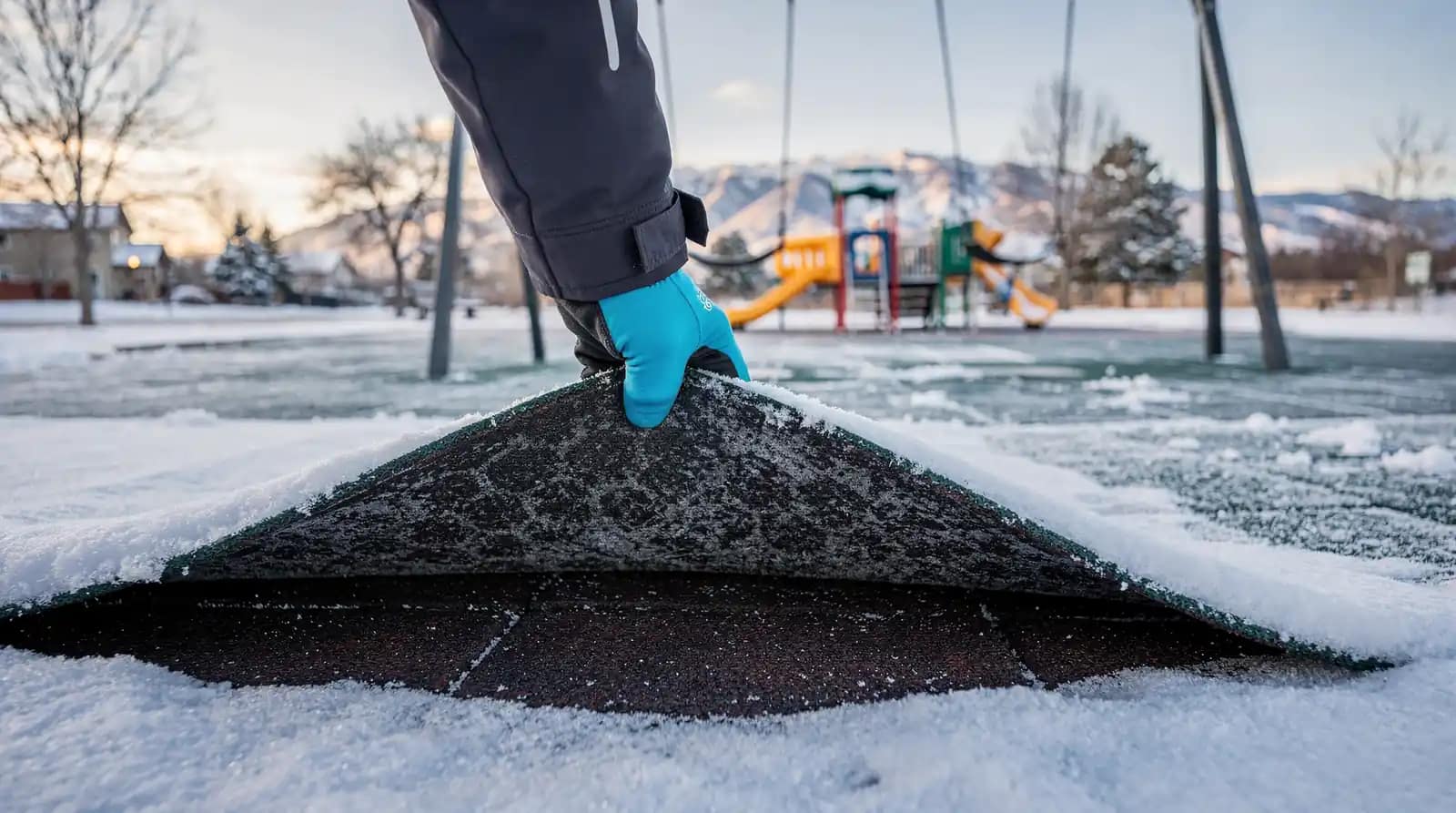
Freeze-thaw cycles turn natural ground beneath play equipment into an unpredictable hazard. Soil that softens during a warm afternoon refreezes overnight into an uneven, compacted surface. That shift matters because falls from equipment onto hard ground remain the single largest hazard pattern tracked in playground safety records. A consistent surface, by contrast, holds its shape through Colorado’s temperature swings instead of degrading season to season.
Artificial turf installation addresses this instability directly. A properly installed system delivers a consistent outdoor surface built to hold up through seasonal extremes, which matters most under swing sets and climbing structures. Playground turf safety fall height depends on surfacing that stays uniform regardless of whether the morning starts at 20 degrees or climbs into the 50s by afternoon.
Does freeze-thaw weaken playground surfacing over time?
Repeated freezing and thawing breaks down loose-fill materials and compacts natural grass into bare, hardened patches. Synthetic surfaces with advanced backing systems resist that breakdown because they’re engineered to stand up against heavy daily use rather than erode under seasonal stress.
Why does this matter for daycare playgrounds?
Daycare artificial grass colorado installations see constant foot traffic from toddlers and preschoolers, year-round. A stable, pet- and child-friendly surface avoids the dry-patch instability that natural grass develops each winter, keeping fall zones predictable for staff supervising active play.
Why Choose Engineered Turf For Daycare Play Areas?
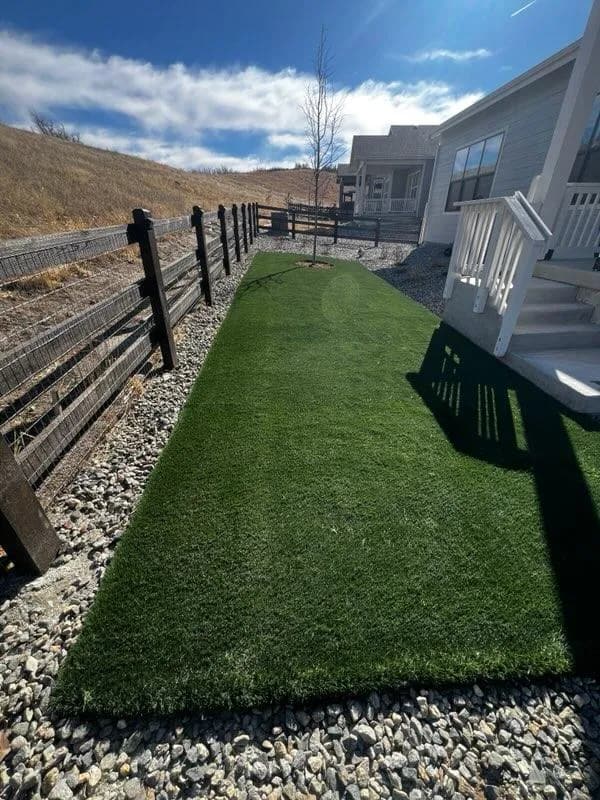
Durability and consistent cushioning make engineered turf the stronger choice for daycare play spaces across Colorado. Falls happen daily where young children climb and run, so playground turf safety fall height performance matters more than appearance alone. Property owners who overlook this factor risk uneven wear patterns, hidden trip hazards, and surfaces that degrade faster under constant foot traffic.
Colorado homeowners already trust premium turf lines for high-impact zones. Fusion Luxury, one such line, gets chosen for front lawns, backyards, pool decks, and playgrounds alike precisely because it handles repeated stress without breaking down. Manufactured in the United States, Fusion Luxury features an advanced backing system engineered for added stability, a detail that matters when dozens of small feet hit the same patch of ground every afternoon.
What Makes a Daycare Play Surface Different From a Regular Lawn?
A daycare surface absorbs far more concentrated impact than a residential lawn ever will. Daycare artificial grass colorado providers specify thicker, impact-rated systems rather than standard landscape turf for this reason.
Artificial Grasscapes approaches every project individually rather than installing a one-size-fits-all layout:
- Site assessment covering drainage, sun exposure, and traffic patterns
- Material recommendation matched to the property’s specific use case
- Installation using industry-leading techniques and premium materials
As a leading Colorado turf installer, the company stays committed to exceptional service and consistent results on every job, including daycare and childcare environments. Property owners ready to upgrade a play area can request a Free Estimate to start the assessment process.
How Do You Get Winter-Ready Turf Installed?
Winter-ready turf installation starts with a local team that understands Colorado’s seasonal shifts. Artificial Grasscapes operates out of Castle Rock, Colorado, placing project oversight close to daycare sites and homes throughout Douglas County and El Paso County. That proximity matters when snow, freeze-thaw cycles, and tight scheduling windows are part of the equation.
Property owners planning a cold-weather project benefit from working with a company that treats every job, large or small, as a top priority. Castle Rock clients receive the same attention whether the project involves a backyard pet area, a commercial space, or daycare artificial grass colorado providers rely on for year-round safety. Staff walk owners through each installation step before any crew arrives. Decisions about base materials, drainage, and surfacing get made with confidence rather than guesswork.
What Should Property Owners Check Before Installing Winter Turf?
Owners should confirm drainage design, base compaction, and infill choice before committing to a date. These factors determine how well a lawn or play surface performs once temperatures drop and moisture settles into the ground.
Can Playground Surfacing Be Chosen in Person?
Yes. A fully stocked Castle Rock showroom lets property owners compare turf samples and safety surfacing options face-to-face. Seeing texture, pile height, and cushioning firsthand helps owners judge playground turf safety fall height performance before signing off on a design.
Those ready to plan a cold-season project can request a Free Estimate and start the conversation with Castle Rock’s knowledgeable turf specialists.
FAQ
Why does winter make daycare playgrounds more dangerous?
Freezing temperatures turn soft natural surfaces into hard, compacted ground, stripping away cushioning. Mulch freezes solid, sand clumps and hardens, and pea gravel shifts unevenly under ice, compromising impact attenuation exactly when children need protection most.
What do ASTM F1292 and F2075 actually measure?
F1292 measures impact attenuation, a surface’s ability to cushion a fall and reduce head injury risk. F2075 addresses engineered wood fiber and loose-fill materials often compared against synthetic turf systems.
How does Artificial Grasscapes address winter fall-height safety in Castle Rock?
Artificial Grasscapes designs ASTM F1292-tested play surfacing with engineered infill and drainage systems resistant to compaction. This maintains consistent cushioning through Colorado’s freeze-thaw cycles, and property owners can request a Free Estimate.
Conclusion
In closing, winter-ready artificial turf transforms daycare play areas from seasonal liability into year-round safety assets. By maintaining consistent cushioning through freeze-thaw cycles and eliminating the hard, compacted patches that compromise fall protection, engineered surfaces deliver the stable, predictable environment that young children and supervising staff deserve. Property owners who prioritize ASTM F1292 compliance and professional installation protect both immediate safety and long-term durability, ensuring that Colorado’s temperature extremes never undermine the protective performance your daycare playground demands.
Related posts:
 Synthetic Turf Base & Drainage Solutions for Colorado Freeze-Thaw Soils: Expert Installation and Design
 High-Margin Turf Upselling Guide for Front Range Custom Home Builders: Cost, Packages, and Benefits
How Much Does Artificial Grass Installation Cost in Colorado Springs? 2026 Pricing Guide for Residential and Commercial Turf