For homeowners who care about the effect they have on the world around them, it is important to consider the environmental impact of artificial grass. For example, water conservation has become a critical issue in recent years, particularly in Colorado where the depletion of freshwater resources has caused concern among residents in rural areas. On a larger scale, people across the United States are becoming more sensitive about their carbon footprint and the related environmental consequences. Replacing your natural lawn with synthetic grass will not only save you money, but it will also have considerable rewards for the environment.
Keep reading this blog for more information about the environmental benefits of artificial grass.
Artificial Grass Is Crucial for Water Conservation Efforts
Many experts have sounded the alarm about exhaustion of water resources, including clean drinking water in areas of the world with high mortality rates. Statistics indicate that more than one billion people currently lack sufficient water. While natural grass lawns require thousands of gallons of water to maintain their lush green appearance and to protect against damage over time, a synthetic turf lawn requires almost no water for maintenance.
What Is Water Used for in Colorado?
On average, Americans use more water per household than any other country in the world. This includes water being used both indoors and outdoors at residences, as well as use by farmers for irrigation and agriculture. In Colorado, water usage is particularly high because of the many rural areas throughout the state.
Residential Indoor Water Use
Colorado residents use an inordinate amount of water for daily consumption, including water for drinking, showering, and laundry. While some residents do make efforts to limit their water usage for daily household tasks, water sources are still being depleted at record levels.
Farming and Irrigation
Water is crucial for irrigation, which is why Colorado farmers also use a large amount of water for agricultural purposes: to more efficiently grow crops.
Without sufficient water sources, farmers would not be able to produce much of the food that we eat. Consider beef, which comes from cows. A cow needs water to survive. Additionally, a cow feeds on grain, and that grain needs water to grow. Some estimates show that the average cow requires millions of liters of water over the course of its life.
Residential Outdoor Water Use
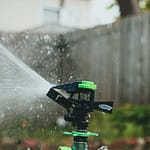
Landscaping involves a significant amount of water. Consider this: every single square foot of space on your lawn will require roughly 50 gallons of water per year just to maintain its healthy appearance.
An easy way to reduce outdoor water use is by replacing a natural grass lawn with synthetic grass. An artificial turf lawn doesn’t need to be watered; it will always remain perfectly lush, green, and manicured.
Reduce Your Water Usage with an Artificial Turf Lawn
Water conservation is especially important when it comes to residential water use. Most homes use more than 100 gallons of water each day for things like doing the laundry, washing dishes, showering, running bathroom/kitchen faucets, and watering the lawn. Additionally, on average, more than half of all residential water usage in Colorado is associated with landscaping and related lawn maintenance. When you replace your natural grass lawn with eco-friendly synthetic turf, you will be taking proactive steps to cut your total water use in half.
Synthetic Turf Protects the Environment Against Pesticides
Water that gets used for landscaping can adversely affect the environment when the water mixes with pesticides and seeps into the soil. Artificial turf is designed to protect against pests such as wild animals and insects: in many cases, it won’t be beneficial or even necessary to use pesticides on an artificial grass lawn.
Moreover, if pesticides or fertilizers are used in the vicinity of your synthetic turf lawn, you won’t have to worry about poisonous chemicals harming anyone who walks on the grass. That’s because the artificial turf sold by Artificial Grasscapes is built for efficient drainage of water from any source, including rain, sprinklers, hoses, and cleaning solutions. This means that the water flows quickly through the turf and does not accumulate in puddles. Just as importantly, water used on the grass does not have a chance to mix with any toxic pesticides that might endanger you or your loved ones.
Artificial Grass Reduces Waste and Pollution
Beyond the obvious environmental benefits, installing artificial turf on your home lawn will also completely eliminate lawn clippings and other waste because synthetic grass does not have to be mowed, trimmed, or manicured. With artificial turf, there is no need to fill bags with grass trimmings and leaves which then must be sent to the local landfill.
Additionally, when you install a synthetic grass lawn, you will be doing your part to reduce pollution by eliminating the need for a lawnmower that releases contaminants into the environment.
Artificial Grasscapes of Castle Rock Can Meet All Your Artificial Turf Needs
If you are thinking about installing artificial turf at your home or business, Artificial Grasscapes of Castle Rock can help. We are Colorado’s top provider of artificial grass products and installation services.
Call 720-425-6437 or fill out the form below.