By Dakota Carino, Artificial Grasscapes
In Castle Rock, commercial properties face increasing demands for cost-effective and sustainable landscaping solutions. Low-operational expense (OPEX) landscaping, particularly through “commercial turf installation”, provides an innovative approach that meets environmental and economic goals. This article explores various aspects of commercial turf installation, covering installation practices, maintenance strategies, cost-effectiveness, and associated benefits for businesses focused on sustainability. Readers will learn crucial strategies for achieving low-maintenance landscapes that beautify their properties while adhering to budget constraints. We will also discuss how these solutions contribute to water conservation and reduce the ecological footprint of retail and business parks.
Installation Practices
The installation of commercial turf involves several key practices that ensure a successful transition from traditional landscaping to artificial turf. Proper planning and design are essential first steps, where layout and surface characteristics are assessed for optimal turf performance. Site preparation follows, which may include clearing existing vegetation, grading, and ensuring proper drainage to prevent water accumulation that could compromise turf integrity. Once these preliminary steps are completed, the installation typically occurs over a span of a few days, depending on the size and complexity of the area.
How Does Artificial Turf Reduce Landscaping Operational Expenses?
Artificial turf significantly reduces landscaping operational expenses by cutting down on water usage, eliminating the need for fertilizers and pesticides, and minimizing regular maintenance costs such as mowing and trimming. With “artificial turf”, businesses can save around 50% or more on water costs compared to traditional grass lawns. Moreover, maintenance becomes simplified, further contributing to long-term financial savings for businesses in Castle Rock.
Why Is Artificial Turf Ideal for Retail and Business Parks in Colorado?
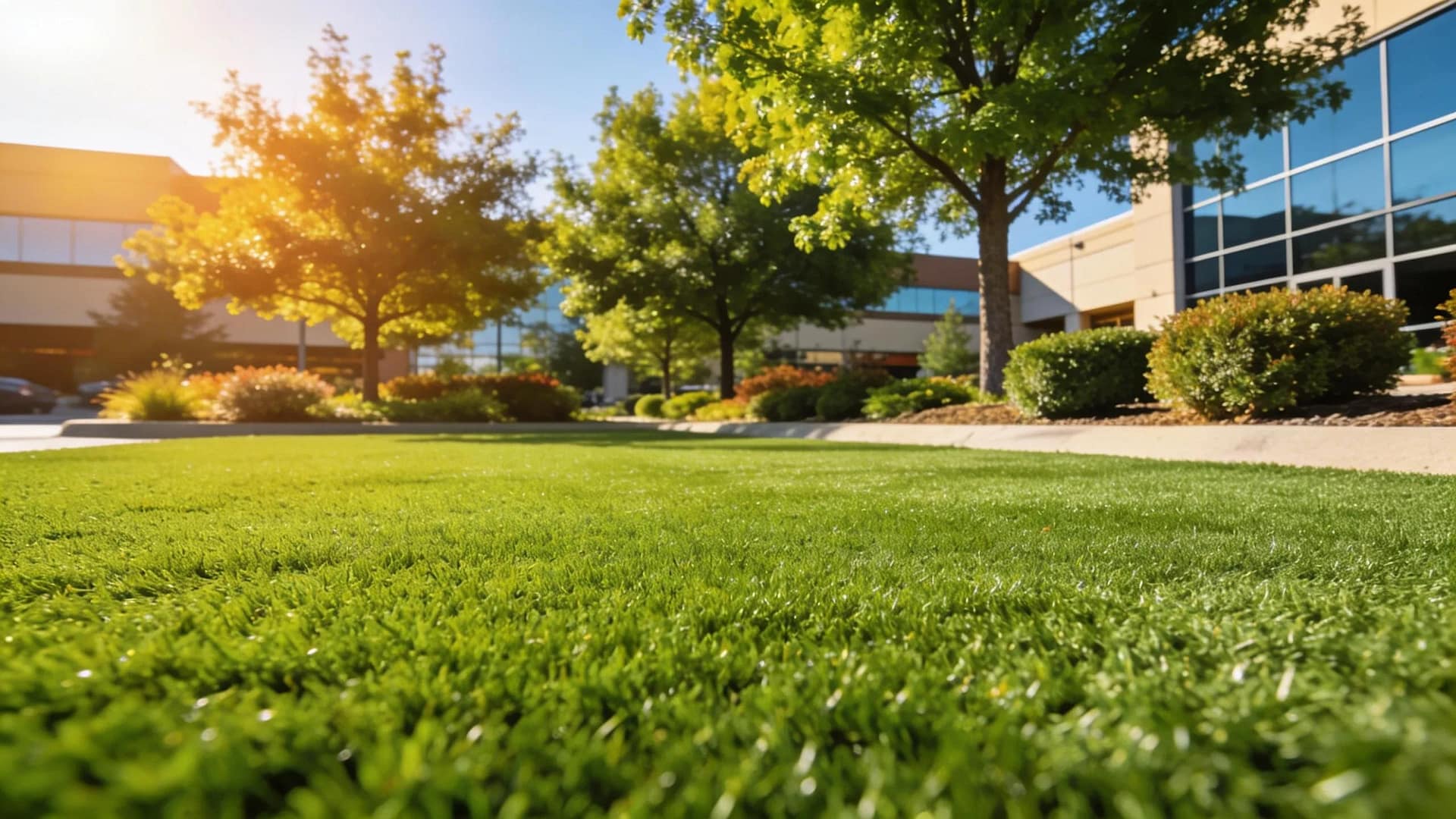
Given Colorado’s variable weather and frequent drought conditions, artificial turf is particularly suitable for retail and business parks. Its durability ensures it withstands fluctuating temperatures and heavy foot traffic without compromising its aesthetic appeal. Business owners can maintain lush, green landscapes that enhance curb appeal year-round with minimal water dependency, allowing them to allocate resources more effectively.
Maintenance Strategies
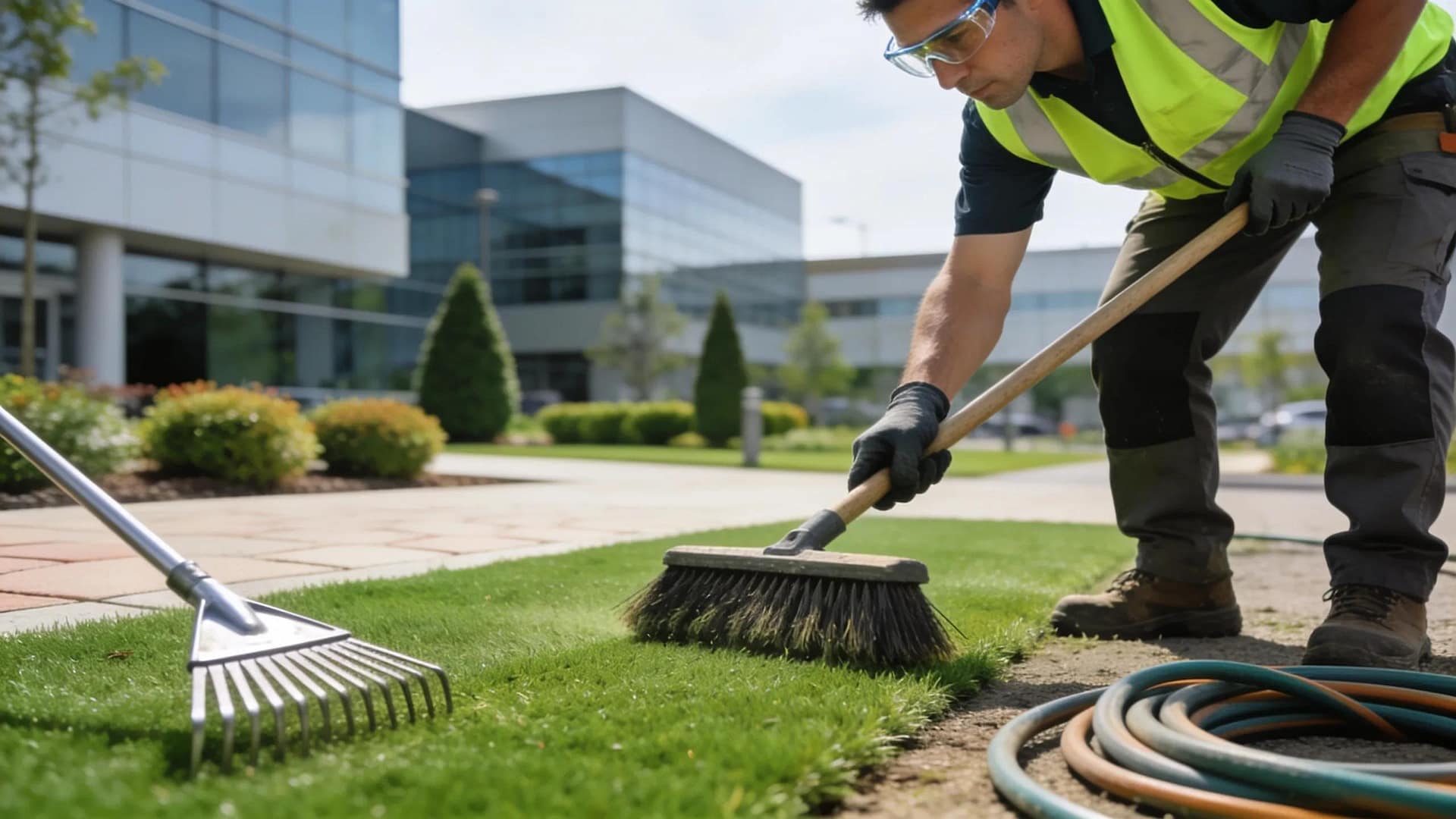
Routine maintenance for artificial turf is straightforward, requiring less attention than natural grass. Regular upkeep mainly consists of debris removal, brushing to lift fibers, and occasional rinsing to clear dust and allergens. Unlike natural lawns, which require consistent mowing, fertilization, and watering, artificial turf only needs minimal interventions to retain its performance and look.
What Maintenance and Repair Services Optimize Commercial Artificial Turf Longevity?
To ensure the longevity of commercial artificial turf, specialized maintenance services should be engaged. These include regular cleaning, infill replenishment to maintain turf cushioning and stability, and periodic inspections for repairs of any seams or damage that might arise. Such proactive measures contribute to maintaining the turf’s appearance and functionality.
What Routine Maintenance Is Required for Artificial Grass in Business Parks?
Businesses utilizing “artificial grass” can anticipate minimal routine maintenance, which typically involves:
- Regular Cleaning: Removing debris and dust to maintain a clean look.
- Brushing: Keeping the fibers standing up for optimal aesthetic.
- Inspection: Checking for signs of wear or required repairs to uphold the quality.
This limited maintenance frees up time and resources that corporate facilities typically invest in traditional land care.
Cost-Effectiveness
The cost-effectiveness of artificial turf compared to natural grass has become an essential determining factor for businesses considering landscaping solutions. Initial investments may seem higher; however, the considerable savings in water usage, fertilizers, and ongoing maintenance costs often lead to a lower total lifetime cost.
The long-term financial benefits make artificial turf a wise investment choice for businesses aiming to enhance the property’s landscape sustainably and economically.
How Can Low Maintenance Landscaping Support Business Parks’ Sustainability Goals?
Implementing low maintenance landscaping, such as artificial turf, directly contributes to sustainability goals by reducing resource consumption. These practices not only decrease water usage but also limit the carbon footprint associated with traditional landscaping tasks, such as mowing and chemical application. An investment in sustainable landscaping practices demonstrates a commitment to environmental responsibility while improving the property’s marketability.
Sustainability in Commercial Properties
Artificial turf is increasingly recognized for its contribution to sustainable practices in commercial landscaping. By adopting these solutions, businesses can significantly lower their reliance on water and chemicals. These eco-friendly practices align with current market shifts towards sustainability, thus enhancing the overall appeal of commercial properties in Castle Rock.
What Eco-Friendly and Sustainable Materials Are Used in Artificial Turf?
Modern artificial turf is designed with sustainability in mind, often utilizing recyclable materials and non-toxic infills. Types of eco-friendly turf options include:
- Recycled Turf: Made from post-consumer plastics, contributing to landfill reduction.
- Biodegradable Turf: Designed to break down over time, minimizing environmental impact.
- Water-Saving Turf: Incorporates materials that enhance water retention, reducing the need for irrigation.
Integrating high-quality, sustainable materials is essential for long-term property durability and environmental compliance, as detailed in recent industry research.
Green Infrastructure: Sustainable Materials for Commercial Property Resilience
The objective of this research was to synthesize scientific, technical, and policy-based evidence that explains how sustainable materials contribute to the design, implementation, and resilience of green infrastructure systems in the United States.
A review on sustainable building materials and their role in enhancing us green infrastructure goals, MM Haque, 2024
How Does Synthetic Turf Contribute to Water Conservation in Colorado?
Synthetic turf plays a crucial role in water conservation efforts, a significant concern in arid Colorado. This landscaping solution requires no irrigation, thus mitigating water scarcity issues during hot, dry seasons. By replacing natural grass with artificial turf, businesses can significantly minimize their water consumption, which is crucial given the state’s limited water resources.
Benefits for Commercial Properties
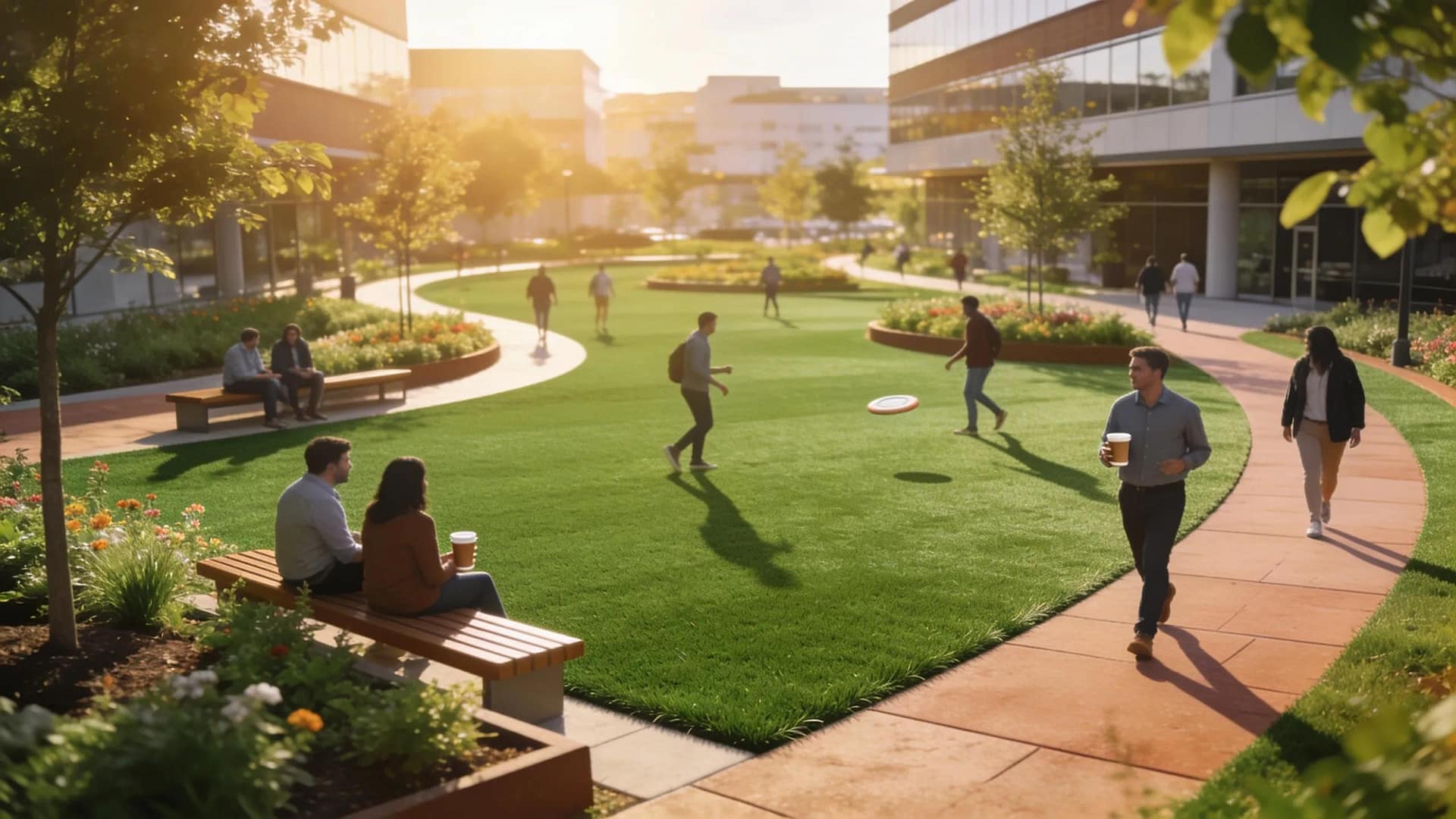
The transition to artificial turf offers various benefits to commercial properties, making it a compelling choice for business owners. These advantages encompass aesthetic improvements, increased property value, and reduced maintenance stress.
- Enhanced Aesthetic Appeal: Artificial turf provides a consistently green and manicured landscape that enhances the visual appeal of business parks.
- Increased Property Value: Properties that utilize sustainable landscaping solutions often see improved market values as environmentally-conscious consumers prefer green options.
- Low Maintenance Stress: The minimal upkeep associated with artificial turf reduces the operational burden on property managers.
These benefits reinforce the decision for businesses to adopt modern landscaping methods, setting a standard for sustainability and aesthetic consistency in commercial real estate.
What Are the Key Benefits of Commercial Turf Installation in Castle Rock?
Key benefits of commercial turf installation in Castle Rock include:
- Cost-Effectiveness: Savings on water and maintenance costs contribute to lower operational expenses.
- Sustainability: Supports conservation efforts and reduces resource usage.
- Aesthetic Consistency: Provides an evergreen landscape that enhances property value and curb appeal.
The integration of commercial turf installation not only transforms properties visually but also aligns with sustainable practices that today’s businesses prioritize.
How Long Does Commercial Turf Installation Typically Take in Castle Rock?
Commercial turf installation timelines can vary based on project size and specific site conditions but generally ranges from 24-48 hours for smaller areas. Larger projects may take several days to complete, involving significant site preparation and precise execution to ensure optimal results.
The efficient installation process ensures businesses can benefit from their new landscapes promptly, supporting quick operational and aesthetic enhancements.
How Are Turf Repairs Managed to Preserve Curb Appeal and Performance?
Turf repairs are typically managed through a straightforward process that involves regular assessments and prompt attention to damages. Ensuring the integrity of the turf through timely repairs extends its lifespan and maintains its visual appeal. Businesses are encouraged to schedule periodic inspections and use professional repair services to effectively preserve the quality and aesthetic of their artificial turf installations.
This proactive approach not only enhances the property’s overall appeal but also reinforces the business’s commitment to maintaining a sustainable and attractive landscape.